
Zondervan acquired Andy Meisenheimer (pronounced "Jones") not so very long ago. He was selling newspapers on the street corner when he was noticed by publishing big wigs because of his loud voice, red hair (he would say "stunning good looks"), and because he correctly pronounced the words 'ostensibly' and 'verbiage' (You try. Not as easy as it looks, eh?)
Now that I think about it, that was a different Andy Meisenheimer. I think he sells pop cans now.
The Andy Meisenheimer WE are interested in has a different bio altogether. Here it is:
Andy Meisenheimer is an editor at Zondervan in Grand Rapids, MI, acquiring both fiction and non-fiction. He is in his fifth year at Zondervan, his ninth year of marriage, his second year of fatherhood, and, like most everybody else, the fourth season of LOST. You can find his name in the acknowledgements of books such as My Name Is Russell Fink and The Almost True Story of Ryan Fisher. (cue wild applause)
(Both covers shamelessly promoted here, and brazenly available at Amazon.com and the fine [real] bookstore near you).


If you get the impression I'm attempting to dispel the notion that editors are man-eating beasts who laugh in the face of first drafts and sleep curled up beside their furious red pens, you'd be right (and a heck of a mind reader too!). Andy informed me that the days of chewing up and spitting out authors has come and gone. He nibbled a big toe once, but he's put that behind him now.
On with the blog! Andy has slapped together a shoddy bit about opening scenes. Actually, it's quiet wonderful - made all the more so because I am nearly certain he jotted it down in about three minutes last night after cooking his lovely wife her dinner.
Alright. Lets all sit up straight - no slouching now! and read this primer about how to open a scene that everyone will want to read - and keep reading:
Opening scenes
by Andy Meisenheimer
Storytellers have a terrible burden. There’s just so much information to give—names, histories, relationships, emotions, bank records, genetics, ring sizes, hair color—and not enough space to give it in.
The problem is: the audience wants drama, not information. Does anyone remember that the entire first season of “Lost” gave us absolutely nothing? They did a whole season without ever opening the hatch! How did we survive? Because we had drama.
A man goes to confession and says “Forgive me, Father, for I have sinned.” The priest says “So, my friend, have I.”
But, the storyteller says, don’t they need to know that the man’s name is David, that he’s six-two and ruggedly handsome? That he needs forgiveness for the murder of his wife’s ex-husband? That his father missed every single ballgame? That he’s a public defender? That he’s independently wealthy?
But if any of those things are important, the audience responds, won’t you show them to us in dramatic format? Won’t he eventually get a call from a client? Won’t he go to his mother’s house and find her crying into her drink? Won’t the detective show up at his door with questions? Won’t he have to scrub out blood from his shirt? Won’t some pretty prosecutor turn her affections his way? Won’t he take her sailing? And if you don’t dramatize that information, then is it really essential?
What happens in those two sentences? A man wants something. Something keeps him from getting it. And the reader is hooked. As long as the protagonist wants something, the audience wants to know if he’ll get it. And they do not want to be exposed to the unessential—and that’s the unessential from their viewpoint, not the viewpoint of the storyteller.
Filmmaker David Mamet puts it in a way that I’m constantly quoting and rarely remembering to attribute to him: “How do we keep their attention? Certainly not by giving them more information, but by withholding all information except that, the absence of which, would make the progress of the story incomprehensible.”
This is why the idea that there should be no information or backstory in the first n pages is, as usual, a good idea gone awry. If there is information needed, make sure the reader enters a scene prepared. Dickens taught us early on to let the reader know important information before it’s necessary. “Marley was dead: to begin with.” We have to know Marley was dead as a doornail to begin with, or nothing wonderful can come of the story. (Otherwise, it’s: “Scrooge saw in the knocker Marley’s face, which was strange because Marley was dead as a doornail!”)
So my bottom-line advice is: make each scene, especially the first one, about drama. Instead of the scene being about a voodoo historian who lost her psychotic son to cancer having coffee with an old friend who makes a crack about “nutjobs”, make it a scene about two people having coffee.
Then, when one of whom ends up slamming her coffee down on the other’s hand, scalding her flesh, and despite her friend’s screams, whispers unintelligibly, you might have a story. The first setup sounds a bit desperate to get my attention. The second one, I have no idea what the heck is going to happen next. And that, as a reader, is exactly where I want to be.
Storytellers have a terrible burden. There’s just so much information to give—names, histories, relationships, emotions, bank records, genetics, ring sizes, hair color—and not enough space to give it in.
The problem is: the audience wants drama, not information. Does anyone remember that the entire first season of “Lost” gave us absolutely nothing? They did a whole season without ever opening the hatch! How did we survive? Because we had drama.
A man goes to confession and says “Forgive me, Father, for I have sinned.” The priest says “So, my friend, have I.”
But, the storyteller says, don’t they need to know that the man’s name is David, that he’s six-two and ruggedly handsome? That he needs forgiveness for the murder of his wife’s ex-husband? That his father missed every single ballgame? That he’s a public defender? That he’s independently wealthy?
But if any of those things are important, the audience responds, won’t you show them to us in dramatic format? Won’t he eventually get a call from a client? Won’t he go to his mother’s house and find her crying into her drink? Won’t the detective show up at his door with questions? Won’t he have to scrub out blood from his shirt? Won’t some pretty prosecutor turn her affections his way? Won’t he take her sailing? And if you don’t dramatize that information, then is it really essential?
What happens in those two sentences? A man wants something. Something keeps him from getting it. And the reader is hooked. As long as the protagonist wants something, the audience wants to know if he’ll get it. And they do not want to be exposed to the unessential—and that’s the unessential from their viewpoint, not the viewpoint of the storyteller.
Filmmaker David Mamet puts it in a way that I’m constantly quoting and rarely remembering to attribute to him: “How do we keep their attention? Certainly not by giving them more information, but by withholding all information except that, the absence of which, would make the progress of the story incomprehensible.”
This is why the idea that there should be no information or backstory in the first n pages is, as usual, a good idea gone awry. If there is information needed, make sure the reader enters a scene prepared. Dickens taught us early on to let the reader know important information before it’s necessary. “Marley was dead: to begin with.” We have to know Marley was dead as a doornail to begin with, or nothing wonderful can come of the story. (Otherwise, it’s: “Scrooge saw in the knocker Marley’s face, which was strange because Marley was dead as a doornail!”)
So my bottom-line advice is: make each scene, especially the first one, about drama. Instead of the scene being about a voodoo historian who lost her psychotic son to cancer having coffee with an old friend who makes a crack about “nutjobs”, make it a scene about two people having coffee.
Then, when one of whom ends up slamming her coffee down on the other’s hand, scalding her flesh, and despite her friend’s screams, whispers unintelligibly, you might have a story. The first setup sounds a bit desperate to get my attention. The second one, I have no idea what the heck is going to happen next. And that, as a reader, is exactly where I want to be.
****
Feel inspired? Ready to tear into your opening scene with vigor? Lets see it!
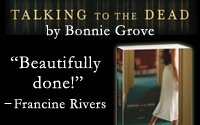
That's right, post your fab opening scene (could be your WIP, your recently published article - or one you hope will be published, or even a favorite you didn't write, but find inspiring!) Let's keep it to a few lines, or a paragraph at the most. I'll start by posting my opening lines from my two upcoming books - oh, man, I still haven't blogged about them, have I? Well, we can get to that another time - Talking to the Dead, and Talking to Angels.
Also, you can leave a comment for Andy, ask him a question, or just tell him how fab, fab, fab! you think he is. Don't be shy!
I bid you good writing




 Posts
Posts


