Showing posts with label books on writing. Show all posts

Wednesday, July 2, 2008

Guest Blogger - No, wait! It's me!

I'm having a wonderful time here on Fictionmatters learning from these authors, and agents. I'm excited to read what's coming up in the weeks to come! Believe me, there is a wonderful line up yet to come.

I wanted to weigh in with some thoughts about books for writers. As many of you faithful blog readers well know, I like to talk about books on writing (just check out the previous series on my blog). But, I wanted to go beyond the obvious and talk about books I recommend as tools for writing that, on the surface, don't seem likely suspects.


The People's Almanac Presents: The Book of Lists (I II and III). These are absolute treasures in my house. Crammed with information about the most interesting, mundane, extraordinary things any writer could hope for.

15 Composers who died in unusual circumstances.The original titles of 27 famous books. The 10 worst films of all time (as of 1980). 10 people who had stigmata. 60 celebrated persons and their brain radiation levels. Oh! The joy!

If this sounds like simple, campy fun, you're missing the writer's boat. Within these lists are millions of story ideas, leads for interesting historical figures that can fit nicely in your fab novel, and a zillion leads to follow while getting your facts straight. Plus, all that trivia makes you the hit of the party! You can track these gems down online, at used book stores, or garage sales. That's right - they're out of print.


Along the same lines, come the easily found Bathroom Reader series - found in discerning potty rooms everywhere. They offer trivia, interesting stories, oddities, lists, information, and tid-bits aplenty. They lack the literary charm of The Book of Lists, and the subject matter is (pardon the pun) more down to earth, but they are still a great place to look for ideas.


Design and construction books; their not just for dreaming anymore! Have you ever been writing a scene that involves describing a house, a piece of furniture, a paint color, or some other important detail and just draw a blank? I have. I think my books are populated with so many wing back chairs because its the one type of chair whose name I can remember. Well, help is here! Your local library, or hardware store, is stocked to the rafters (hey! there's a construction detail right there!) with books that will help you know your deck fasteners from your spring latches - your Louise VIII from your Swedish sling back. Write with authority!

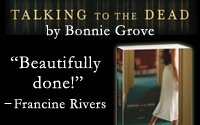
In a scene in my upcoming novel Talking to the Dead, my protagonist visits her mother, a recent widow. She notices a smooth stone on the counter and the two women discuss the benefits of baking stones. The point of the scene is for Kate, our hero, to take notice of the many subtle changes in her Mother's life and home since her father passed away. Where did I get the idea of a baking stone? You guessed it. A cook book. It's fun to create characters who eat things I would never put in my mouth, dine in restaraunts I can't afford, and know about cooking techniques I never have time for. It also adds dimention to your characters.

Books about the major world religions. Canada prides itself on being a "cultural mosaic". A place where every culture, religion, and worldview can be practiced and appreciated. Regardless of how you may feel about that, the fact remains there are millions of people around you who are speaking a different spiritual language. If you are wanting to communicate larger truths to these people in your writing, it's a good idea to have a rudementary idea of what they believe in, and, perhaps, why. This will broaden your worldview, increase your empathy for others, and you will learn fasinating things about the people around you.

This short list gives you the idea that writers really do find ideas "everywhere". The truth is one idea for a single charater, or setting, or scene, can come, literally from a dozen sources which are blended together into seamless, stunning fiction.
Here are some more great books I've used to enhance my fiction writing:
Psychology and Sociology text books.
History text books.
Off-beat non-fiction such as a wee gem called The Pregnant Man and other cases from a hypnotherapists couch
Medical pamphlets found in doctor's waiting room
A letter a man had written to a Dear Abby type column in my local newspaper
My old journals
Faithful bloggers, it's time to share your treasured gems of idea books with the rest of us. Have you read something recently that, to other people, would seem banal, but you used as inspiration? What do you think of the books I've posted as writer's aids? I'd love to hear from you!
Until then, I bid you good writing.

Tuesday, June 17, 2008

A Respite From Retreat

A family comes home after being away for two weeks. Luggage on the floor, mail piled on the table, that icky stale smell of a house that's been shut up for two weeks; they stand on cramping legs and sigh, "I need a vacation from my vacation!"

I wasn't exactly on vacation, but I was away (note previous entry). And now I'm back. Still trying to catch up on the lost sleep. I added it up. I slept for 15 hours divided over 5 days while away at the Write!Canada Conference in Guelph, Ontario. And, for the record, I wasn't the rowdiest person there. You know who you are.

But, home again, and it's time to get back to the work of being a writer. What I want to do over the next several blogs is to tie in lessons I've learned, observations I've made, and skills I see lacking in beginners writing that I noticed at the writer's conference to the previous blogs about books on writing. (Gee, that was a massive run on sentence. You get two points if you can untangle that mess and post a concise translation of it in the comments section of this blog.)

I've been talking about how to find the best books on writing, how to gage if a book is useful to you or not, and if you should invest in buying a book that you aren't sure you really need (NO!).

Now I'm in a better position to address the specific issues of beginner writers. I was faculty at the conference (I gave a 75 minute workshop called Strength to Write: How to find you voice and passion as a writer). I also had the opportunity to critique dozens of manuscripts (9 ahead of time, and the rest were 'on the spot' critiques where people signed up for a 15 minute interview with me), and the problems I saw in manuscripts were pretty much universal.

So, with that in mind, I'm going to spend the next few blogs addressing the systemic problems, and detail problems I found in the manuscripts. If you are just starting out as a writer, then you need to subscribe to this blog - you'll learn so much, not just from me, but from the minds of many great writer's that I will bring in over the next few weeks.

Here are a few topics that I'll be covering in the blogs to come:

Titling you work

Get to the Action (or the point)

Introducing your ideas to the reader (No, no, no, no, no!)

Writing is never having to say you're sorry

Find your voice (it's better than being a technically good writer)

Passive voice is so passe

Narrative summary

Foreshadowing: The promise of plot

Sandbagging your scenes

Genres that sell today (and why your old favorite may not work anymore)

POV First person vs. Third Person vs. Who's telling this story anyway?

Passion for the story
Books I recommended to new writers

Fasten your seat belts! It's going to be a blast!


I bid you good writing.

Friday, May 30, 2008

Writing Rules that Make Sense - Sort of

Quick tip for Writing Books: If you've been writing for awhile, you are beginning to have an idea of which areas you are strong in, and which areas you need to spend time perfecting. Look for specialized books in the area you need to work on (or the area you haven't researched yet). There are all kinds of style books out there (Thanks Strunk and White), but there are also books that focus on grammar, POV, characters, dialogue, etc. Don't buy them all! Just the one that covers in depth the aspect you need the most help with.
***


You should see my inbox. There are days I have to wade through reams of advertisements in order to find that e-mail from my agent I've been waiting for, or that note from a friend, or, even more fun, a fan!


It's not that I have a spam problem. It goes back to the days when I was starting out as a writer. I figured it was a good idea to sign up for a bunch of writing focused magazines, book clubs, contests, etc. I mean, I'm a writer, right? So I should have all sorts of writerly materials filling my inbox.


Daily, I am reminded of a contest site where I'm invited to enter my choice of 1,000,000,000 contests being run at THIS VERY SECOND. I'm told I qualify for a FREE BOOK, and that I have a CHANCE TO WIN a book by some author I've never heard of! Woo Hoo!


Well, I got to thinking.


I love it when that happens. Thinking. Makes me remember what my brain is for.


I got to thinking about how a writer should make the best use of all the opportunities to enter contests, do writing exercises, etc. Here are my thoughts on the subject:


Nearly every writing book you pick up will be jammed packed with writing exercises. Each one focusing on a specific aspect of writing. There are entire books dedicated to writing exercises, such as Brian Kiteley's book The 3 A.M. Epiphany: Uncommon Writing Exercises that Transform Your Fiction. I happen to own this book. I love the cover.


Then there are the contests. Oh my, oh my, there are contests. Contests where you are given the first sentence and you have to write the rest of the story, contests on specific topics, on specific genres, short story, poetry, inspirational, long story, poems about dogs; it's nearly endless.


So, should a writer be spending time doing writing exercises from a book? Entering contests?


Yes.


And no.


Here's what I say: Books like 3 A. M. are great because they force you through a sort of writer's mental gymnastics. They get you thinking out of your regular patterns and can help you to add dimension and depth to your writing. They are focused on specific aspects of writing, so you can work on areas you need the most help with. So, in a nutshell, they are fantastic.


But. . .


Well, lets talk about contests for a moment. If you ever land an agent, or a publisher, they are going to ask you if you have ever won a contest. It looks good to say you have won something for your writing. If the contest was a half decent one, a notation of your win may even grace the cover of your upcoming book. Add to that the fact that when you submit your work to a contest, you are submitting to much the same intellectual process as if it were to a publisher. Your entry needs to be properly formatted, and clean. It must be well written. It will be judged by a panel, it will be compared to the work of other authors. This is a good thing, especially if you are new to writing. It's a good way to get your feet wet.


But. . .


Here's the rub, as far as I'm concerned. Writing exercises and entering contests take a lot of time. Hours and hours of focused work go into preparing a manuscript for a contest (or, at least it should if you want to win). Writing exercises are set up for you, and you follow the format that is presented to you (in other words, you work on what someone else suggests you work on). This takes time away from your masterpiece; your book (or whatever it is you are writing that you desire to see published).


Okay, it is totally worth the time it takes to become a better writer, to get feedback on your writing and to improve your skill sets. You may want to consider blocking some of your weekly writing time for just such pursuits.


But. . .


Don't get distracted from your real goal: to finish your own work.


This past winter I opted out of all contests and writing exercises.


I wrote two books, and two short stories.


All of them are either published (the short stories), or being published (my books).


I took the time to focus what I had learned on my books, rather than spreading my time out on contests and exercises.


The take home lesson: Do what you need to do to become a great writer, beginning with making the best use of your time.


Peace.

Tuesday, May 20, 2008

Books on Writing, Part One

Books on Writing Quick Tip: Look for compilation books about writing. They give you a broad perspective on a wide range of subjects. This is helpful especially if you are just starting out and are wondering where to focus your writing. The book I'm talking about today is an example of a compilation book.


Eliza Clark has put together a slim book called Writer's Gym. It's available at Amazon.ca (but not at Amazon.com for some reason). It's published by Penguin Canada (Yeah Canada!). It's slim, but it's good. I'll say this here, if you are sensitive to language, this may not be the book for you. It's mainstream and there are examples of harsh language that are prevalent in our culture. Not that the book is over run with it, but it's there. Even Margaret Atwood uses the "f" word. And here I was thinking she was above all that. :)
Here are a few things I like about the book.
~The chapters are short. Some barely two pages long. These short chapters give you the feeling of a brief, intense "workout". Each chapter is contributed by a different person (author) and is dedicated to a different concept of writing. There are interviews too, which are just okay. I like the "Five Rules for Writers" that different authors list. They give good tips, and show how diverse approaches are to writing and what's important (and what's not) to different writers.

It's in a list of rules for writers that I want to linger for a moment. Kate Pullinger (she's Canadian born, now living in England) contributed her list of five rules. Rule #1 Never use adjectives and adverbs. Well, she lets up a bit on the adjectives (whew!) but insists writing be adverb free.

This is a good rule. A rule to be followed. I would personally be grateful if all of you were to turn to your volumes of writing and strike each "ly" word from the pages. It's amazing how much stronger your prose will be without them. You will be amazed and grateful.
But.
You knew there was a but, right?
One problem with this rule.
The use of the word "never". Never use adverbs?
Yes, use adverbs. Only use them better, smarter, and more interesting that other writers.
How?
For this answer we need to turn to a different book. Arthur Plotnik's book Spunk and Bite offers the daring writer some good advice about adverbs (and a whole lot of other "rules" that we are supposed to care about). For all the details, go get the book, but for our purposes, what we need to know is that there are exciting ways to use adverbs in our writing that make the prose fresh and interesting. Chapter six of his book is dedicated to the subject. A take home lesson from this chapter is that, if paired with an unlikely word, adverbs can be used (sparingly) with spectacular results. For example: "Exactly nothing." "Violently beautiful." "Stunningly dull."

Practice using adverbs in fresh ways. You'll be stupefyingly glad you did.

Monday, May 19, 2008

Books on Writing

Writing Books Quick Tip: Whenever you see a book on writing you think you'd like (I subscribe to Writer's Digest, so I see lots of books on writing that seem to call out my name), go straight to the Internet, pull up the website of your local library and see if they have the book in their system. If they do, go get it. I learned early not to buy every book on writing that looked interesting. I try them on first. I've saved a ton of bucks doing this.

But, on with the blog.

If you've been a writer for more than ten minutes, you'll be familiar with the oceans of books available designed to teach you about various aspects of writing and getting published (I've yet to see one really good book on how to get your book marketed - I think there are a grand total of two books out there on the subject). To be honest, most of the books contain the same sort of information. Format seems to be the issue with writing books - how the book presents the information to you, chapter length, original visual appeal over original content.

Still, there are a few "gems" out there, books that speak meaningfully to the writer. I'll post some of my favs here, and I'll talk about some I didn't like and why.

I'll also spend some time talking about the actual advice given in these books and highlight some contradictory advice I've come across and show you how to break the rules of writing on purpose, with great results (It's a good thing when publishers call you "original" or comment that they like your 'voice'.)

Along the way, I'll talk about pieces of writing advise I've read from other, well established authors, and why I think it is great advise, and, in some cases, why I think it's gibberish.

One thing I've noticed about books on writing is that few of them speak well of the art of writing, the art of creating worlds on blank paper. Some try, but they seem to come off as flaky, self-absorbed, or worse, not very well thought out. To me, it seems that books on writing tend toward the nuts and bolts of writing (the simplest things to learn and talk about), and very little about the art of creating great writing. I'll try to do both in the weeks to come. I'm hoping you, my happy blog readers, will point out to me when I've lost sight of this goal.

I'm looking forward to these coming weeks as we look into the world of books on writing.

On my next blog I'm going to introduce you to a book I think is worth looking at (at least borrowing from your local library), and I'll examine the contradictory advise about the use of adverbs in fiction writing.

Saturday, May 17, 2008

Elements of Fiction

In the weeks to come, I'll be bringing together various elements of fiction (and writing) in a format that will look something like a "workshop".

This, of course, is not my intention. But sometimes we plan to do things we do not mean to do. Which is what I am planning to do now.

Like all writers, I'm a reader. I read all sorts of useful things, books, blogs, newspapers, nutritional information on the sides of food stuffs. On a recent trip to the library, I came away with my usual haul: two books for the kids, a video each, a novel for me, and two books on writing (sometimes there is a cookbook, or gardening volume thrown in there). I set about reading one of the books on writing. Hmmm....I like the book very much. It's chapters are weensy short, the content is presented in a way that is fresh and interesting - and best of all, it's a compilation, so it's not full of advise from just one author.

Lately, I've become bored with writing books. They were all saying the same thing. Blah blah blah. Then, I got thinking. They actually weren't saying the same thing in all instants. Which got me looking into where writing advice from author/gurus differ. Fun stuff!

So, what I'm going to be posting over the next few weeks are insights and lessons learned from the contradictory advise on writing: who is right, who is wrong, who is out to lunch, and who has two feet planted on the earth.

I'll be borrowing from various books - and I will be sure to give you all the info on the books I cite for your own reading enjoyment.

I'll pan a few books, I'll praise a few, and then review the rest.

It's book on writing! Next on Bonnie's blog!