Showing posts with label Nicci Jordan Hubert. Show all posts

Thursday, March 4, 2010

Figuring it out - Writing as a Journey

With the bulk of the work on my next novel behind me, I'm looking up from my computer screen, stretching, and reflecting on the experience I've come through writing Time and Time Again.

I was talking to my fab-o editor, Nicci Jordan Hubert (otherwise known as the best editor a fiction writer could hope for), and I told her that this novel felt as if it has been ripped from my spinal cord. Writing it was a personal journey of creative self-discovery. I literally learned as I wrote - sometimes creating prose I was proud of, other times. . . not so much. In the end, it came together into a novel I'm proud to have written and excited to share with readers. And as difficult as the process was, I wouldn't change a single thing about it.

Being published doesn't mean you've figured everything out. In fact, I've learned that being on the happy side of published simply means you are presented with a new, previously unknown, learning curve. Every part of my journey has been about me figuring it out.

As I reflect on writing Time and Time Again, I have discovered some wonderful things about myself. The biggest discovery is how much I've yet to learn. I'm not daunted by the fact that I've so much ahead of me to learn. I've become comfortable enjoying the process. I wanted to share with you some of the things I've learned in hopes that some of them might help you as you're figuring it out as well.

1. Creative thinking is different. I'm a person of logic. Thinking in a straight line has helped me get through university, jobs in counseling and program development. It's helped me write a non-fiction book on how to discover and develop your strengths. I'm a straight ahead thinker - except when it comes to writing fiction. My creative thinking works circularly - not linear. I can't move from logical plot point to logical plot point in a straight line when I am creating fiction. Instead, I need to hover over and around an idea for a long stretch - breathing life and dimension into it until it stands on it's own feet. Then I can move on to the next part.

2. I don't think inside of timelines. A funny realization for someone who wrote a novel called Time and Time Again - but for me, story rises above time, outside of time. My brain is Brigadoon rising from the mists every few hundred years - it carries on, irrespective of time. This isn't the only reason I need a great editor to nail my feet to the floor, but it's a good one. Regardless of my good intentions, I never write enough time cues into my novels. Why? I think sequentially - but not in terms of time. This happens, then that happens. That's good enough for my creative mind. But it isn't good enough when I hope to bring readers along for the ride. I have a note on my computer screen reminding me to include time cues at the beginning of scenes.

3. I create fiction within a specific, tightly framed time frame. Okay, I just said I don't think in terms of time lines. True enough, but that hasn't stopped me from seeing a time pattern within my writing. My stories (thus far) take place between late spring and early fall. I'm a summertime gal! These months hold fascination for me. I'm Canadian, so winter often means a sort of semi-hibernation. Summer is where the action is. As I've reflected about this, I've come to discover that my most idealistic hopes, my favorite memories are in summer. Life happens in seasons - seasons of joy, sadness, wellness, loss, striving, or blessing (to name a few). It seems I am drawn to a literal season in which to tell my stories.

4. Blind faith works. I simply believe. I believe in my story. In my ability to tell it. In the reality of the novel finished and on the shelf. Even when the words come out cockeyed, or worse, don't come at all. I've wrested with the issue of writing fiction (anyone who has sat alone for a long period of time talking only to imaginary characters will understand the need to be absolutely sold out to the idea that what you are doing is important) as I wrote Time and Time Again. I had long talks with God about if this is what he truly wants me to be doing. I was willing to accept his answer whatever it may have been. And all the while, I wrote. Some good words. Some bad words. Edit, edit. Pray, pray. And I kept writing. Because inside my questions and doubt, I had faith.

5. I know my team is behind me. My teams begins with my family. My husband is the primary reason I'm able to stay at home and write. He believes in me. My kids, too. My "in the industry" team is behind me - and there is nothing like knowing the people who agent, edit, and publish you believe you will create something special. My publisher has sent surprise e-mails simply to say, "I'm a fan, and I'm praying for you." My editor has talks to me frequently, reinforcing her faith in our partnership. Having a team of people who care about me as a person has made all the difference. Boosted my faith, brightened my disposition, and helped me finish the novel. Everyone needs a team who believes in them!

How about you? What have you learned about yourself as you've journeyed into the world of fiction writing? How is the "figuring it out" process going? I'd love to hear your insights!


Wednesday, December 9, 2009

Fictional Faith

I'm slung deep in my chair, an open bible at my elbow (the study version, large and serious looking - enough bulk to make me feel clever and knowledgeable), keyboard in my lap (cordless - I often type with my feet up. Sorry Mavis Beacon), and I'm thinking. And thinking almost always gets me in trouble. But. . .

It's a favorite past time. Daydreaming. Spinning ideas. But today, there is relish, today I'm thinking in one of my favorite ways to think - deeply, searching for the backdoor, tripping over potted plants as I skirt around the corner of thought only to be confronted with yet another intriguing question. I don't mind dead ends, I don't mind dark alleys, the questions too impossible for me to answer. I embrace it all and revel in the experience of the search, in the luxury of looking around my brain and the resources available to me to see what I can come up with - whale or sardine.

I'm thinking about a question my fabulous editor, Nicci Jordan Hubert asked me yesterday. We were discussing a character I have created, a fine fellow who features in my next novel. He is a Christian, this character of mine, and my editor asked me if I could explain why.

She said it, just like that. "Why is he a Christian? Why, with all he suffers, does he cling to faith?"

It's simply the best question I've ever been asked as a writer. And while it might be tempting to reach for the quick answers about faith being irresistible, and experiencing divine love being unarguable (and it is), it's always better for a writer to stop, breathe, and look closely at the question before attempting to answer.

This is what I have done - and this is how I find myself hunkered over my study bible reading the sparse details of OT theophany and NT incarnation (and yes, NT theophany too - they are in there!). Questions about faith drive me to my bible - they begin and end with God, assuredly - but writing fiction requires I open the pages of my bible without a preconceived idea of the answers. I must approach with an attitude that says, "Show me" rather than one that says, "Prove me right".

I write fiction, stories that are not true, in order to help all of us (including me - especially me) find courage to explore the facets of faith, the unfathomable depths of God, the mystery of union, the fierceness of love.

I don't write novels because I have the answers - but because I have questions, ones I think you might have too. Good questions worth exploring, confronting. I ask them, not with a fist to God's face, but with open, dirty palms of hope. I ask because I want to understand more about the God I can never fully comprehend. I know He is not afraid of my wondering, not cowered by my doubts, not changed by my wavering understanding. I write fictional faith in order to help me understand my own, very real faith.

In doing so, I've come to see scripture in new ways. I've come to appreciate (rather than overlook, or worse, dismiss) the mysteries I find inside God's word. As much as His Spirit illuminates, He also points to deep things - groaning things - unseen things caped within God's character. It is an invitation into places He knows I cannot fully understand, but He longs to share with me, with all of us. It is an invitation for all of us to enter in and explore the fullness of freedom that is found in Christ.

So I contemplate my editor's question. I give it long attention. I apply the brakes to my easy answers, my insta-knowledge, and contemplate, snoop, poke, and most of all ask questions. In writing fictional faith, I find my faith can be transformed.

I bid you good writing.

Thursday, December 18, 2008

Mysterious Art

The Bible talks about the mystery of marriage - the blending of two souls into one. Goes so far as to akin this mystery with humanity's connection to God - complete, living, breathing, strange, beautiful.

One of my favorite things about being married to my husband, Steve, is the partnership we have. We're rowing in the same direction - and if one of us needs to turn the boat around for some reason, the other is there to help rudder the changes needed. We're on the same team, even if we don't always know what we're doing.

The partnership that comes with editing a book with a professional editor has, believe it or not, parallels to the mysterious connecting of two people working together as one. While not nearly as significant as connecting to God or to a spouse, the connection between two artists at work on the same project is nothing if not mysterious, strange, and beautiful.

My agent recently expressed her admiration for the editor I'm currently working with - "A gem" she said. "I trust her completely." Trust is that critical component in partnership. And when it comes to taking a literary blade to your book, nothing comes before it. Through the experience of working with an editor for the first time, I've come to trust her. And with trust comes mutual respect for each other and the project.

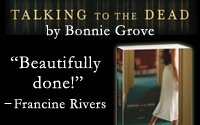
In an early conversation, Nicci brought up adding a large chunk of material to the book (it was sitting at around 80,000 words at that point). She gave me the reasons for the addition of about 20,000 words. Then she said, "I think we need to nix the sequel - tie everything up in this one book." I had already written 40,000 words on the sequel. It had a title and a cover (a deeply cool cover created by the same brilliant mind that created Talking to the Dead's fab cover). And here the dear woman was saying, "Let's scrap it, shall we?"

My reaction?

I smiled and said, "Absolutely, yes."

Why? Because of the mystery of partnership. I'd talked to Nicci enough before we began work on the book to know we shared a common passion: Making books that provide the best possible experience for the reader. Yes, I'm the writer, but the book isn't about me. It's about you, the reader. If fiddling with 60,000 words is what it takes to make the book a great read, I'm excited to do it. If it means abandoning a half-finished manuscript, so be it. And my editor feels the same way; it's not about her, it's about the reader. If that means she has double her work load, she will.

It makes no sense for the two of us to be so excited about creating so much work for ourselves. It makes no sense for us to want to spend weeks neck deep in changes, staring at words until our eyes blur and we can't remember what happened in the last sentence never mind the last chapter. But the mystery of partnership makes it possible. I'm no longer trodding the path alone, relying solely on my own resources for direction. I have this trusted friend who expertly leads and follows at the same time.

This week it got bad for us. Storm clouds, driving rain, the path washed away. I fell in the mud, and pulled her down with me. I felt responsible for the weather - still think I was - but within the mystery of our partnership, Nicci and I were able face the deluge, and even smile, then laugh. Two people giggling at the mess they'd made, certain the outcome would be worth the effort, and even more committed to creating the best reading experience possible.

And the sense that because she and I have been able to forge this mysterious connection, it will spill over to the reader and connect them as well - to me, to her, to each other.

Art is about the mysterious.

I bid you good writing.

Wednesday, November 5, 2008

Gulping Back Tears of Gratitute


First out of the chute, let me say I'm deeply humbled by the outpouring of support, encouragement and out and out cheering from all of you. I'm beyond blessed to be part of such amazing group of writers and readers - literally around the world.

In the comment section of my last post, I hinted at more cool news about Talking to the Dead. I want to share with you a blog my editor wrote. Nicci Jordan Hubert is a NY based editor who has edited books of fantastic authors such as Joy Jordan Lake, and Sigmund Brouwer, among others.

And now she's my editor for Talking to the Dead (and my next book - which I THOUGHT was going to be a sequel to Talking to the Dead, but isn't. I'll update you on that bit of news when I'm able).

On top of being a fantastic, brilliant editor with a mind for knowing, she's a generous soul, one of those people you wish you went to high school with. Someone you know, just know, instinctively would french braid your hair if you asked her to. She's just that nice.

Think I'm exaggerating? Putting on the dog (as my mother would say, and please don't ask me what that means, I haven't a clue) and making nice nice? No way.

Check out Nicci's blog post called Word To Bonnie Grove: I'm Obsessed. There you will also find a "sneak peak" of Talking to the Dead.

As I said, I'm humbled. And deeply grateful.
I bid you good writing.